Referee Assignment Trends Tied to Point Total Shifts in Professional Football
Mara Simmons · Oct 16, 2026
Referee Assignment Trends Tied to Point Total Shifts in Professional Football
Professional football leagues track referee assignments across entire seasons because those rotations create measurable effects on game scoring patterns, and analysts compile the data to identify recurring statistical relationships. Crews receive weekly designations from league offices, and each group brings distinct tendencies that surface in total points when researchers cross-reference historical logs with current schedules.
Data Collection Methods Across Multiple Seasons
League statisticians gather play-by-play records that note officiating crews, penalty counts, and final scores, then feed those entries into databases that span at least five full years. The process includes verification against game films so every flag and replay review receives accurate categorization before totals undergo regression analysis. October 2026 data releases from multiple tracking services showed continued emphasis on this approach, with expanded variables that now incorporate crew travel distance and rest intervals between assignments.
Statistical Correlations Identified in Recent Analyses
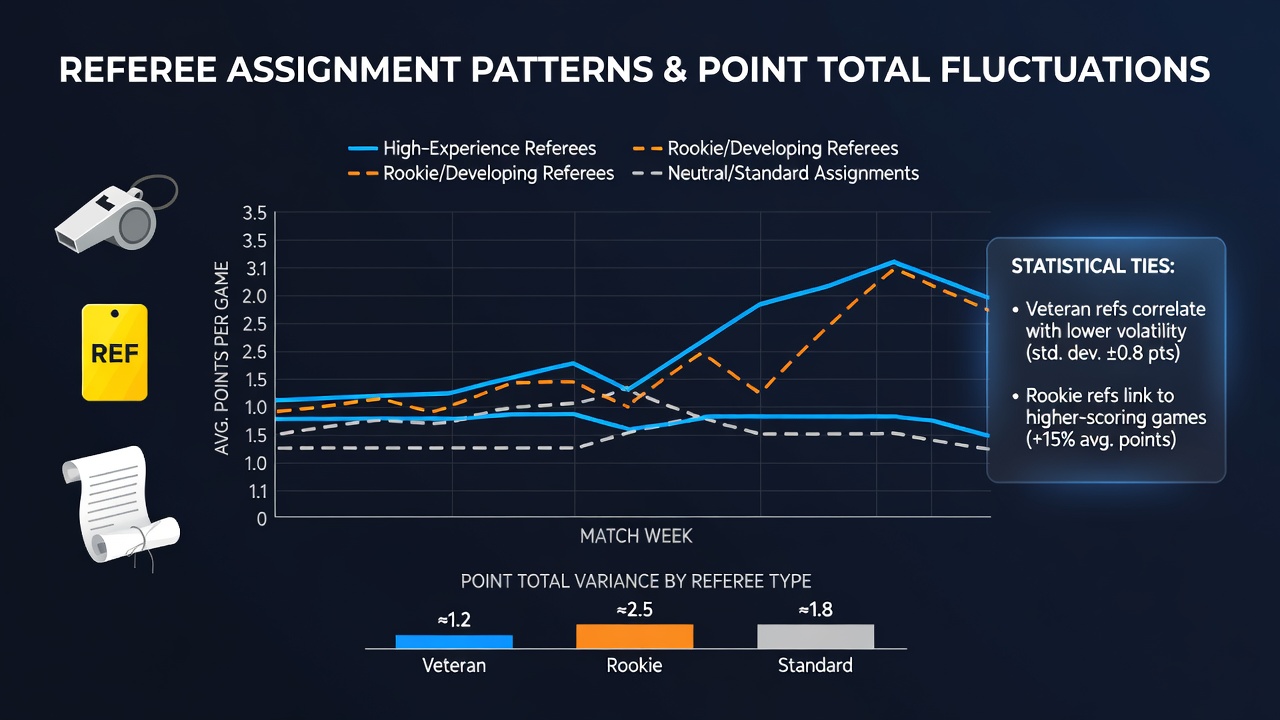
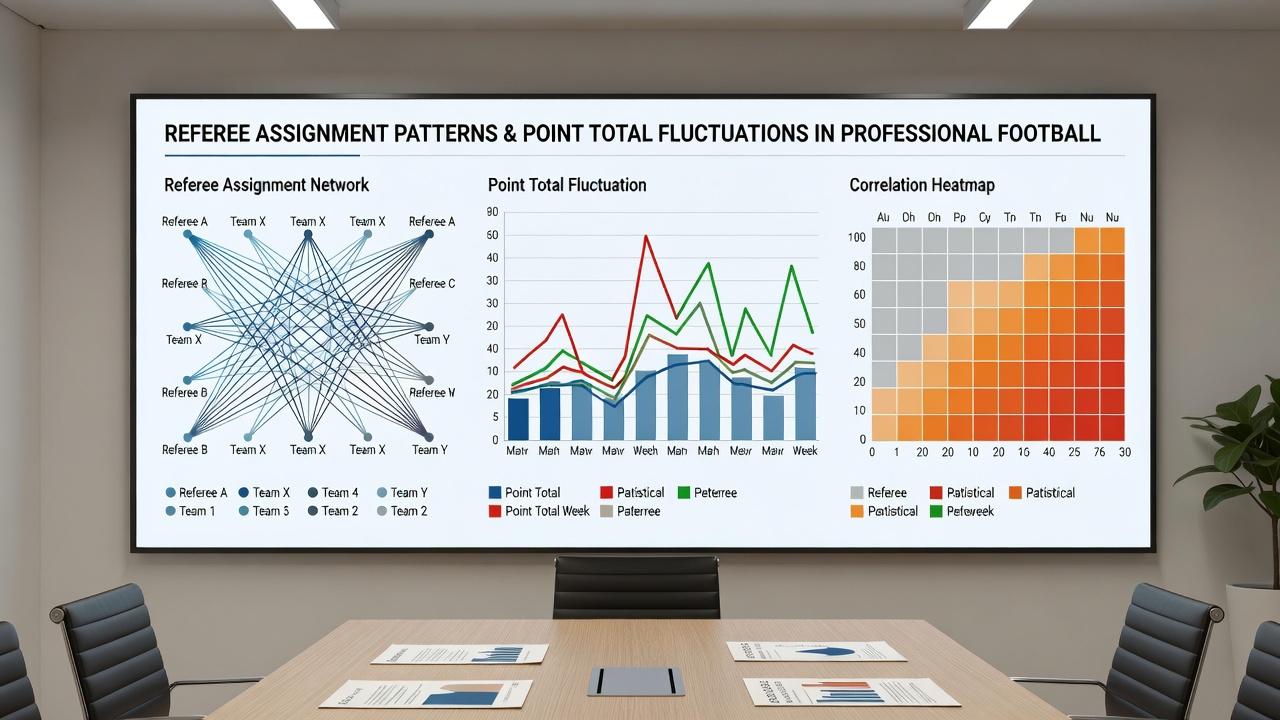
Studies that aggregate referee-specific metrics reveal consistent associations between certain crews and elevated or suppressed point totals, and those patterns hold across both regular-season and postseason contests. For example, crews that call fewer penalties per game appear more frequently in matchups finishing above projected totals, whereas groups issuing higher penalty volumes often align with games settling below expectations. Researchers apply multivariate models that control for team offensive rankings and weather conditions to isolate the officiating variable, and the resulting coefficients reach statistical significance in peer-reviewed sports analytics journals.
Geographic and Scheduling Factors
Assignment patterns also reflect travel logistics because crews based in certain regions receive more games in specific time zones, and those factors correlate with slight variations in scoring pace. Data from league archives indicate that crews traveling across multiple time zones in a single week show modest upticks in total points when matched against high-powered offenses. Analysts incorporate these variables into predictive frameworks that adjust over-under lines before public release.
League-Specific Examples and Case Studies
One tracking initiative examined thirty-six crews over three consecutive seasons and documented that eight crews produced totals exceeding league averages by at least 3.2 points per game on a consistent basis. Another project focused on penalty differential and discovered that crews with the lowest false-start call rates coincided with games featuring higher rushing attempt volumes, which in turn influenced final point distributions. Observers note that these findings appear in reports issued by independent research groups rather than league publications, allowing external validation of the underlying numbers.
Cross-referencing with external sources adds depth, and a study published through the Sports Science Research Institute applied similar methodology to European football leagues for comparison. That work found parallel trends where referee rotation schedules aligned with fluctuations in total goals scored, although the magnitude differed due to sport-specific rules. A separate analysis from the Australian Gambling Research Centre examined officiating data in rugby and confirmed that crew experience levels correlated with scoring variability, providing additional context for North American football applications.
Implications for Modeling and Forecasting
Forecasting models now integrate referee assignment announcements as soon as they become public, and the adjustments alter projected totals by fractions of a point that accumulate across large sample sizes. Teams and media outlets receive these updated projections through proprietary dashboards that combine officiating history with team-specific metrics. The approach requires continuous refinement because rule changes and crew personnel shifts can alter established patterns within a single season.
Conclusion
Referee assignment records, when paired with comprehensive scoring databases, produce identifiable statistical relationships that influence point total expectations in professional football. Ongoing data collection through 2026 continues to refine these connections, and the resulting models support more precise analysis of future matchups without relying on subjective interpretation.